Rupiah Breaks 18,000 Per US Dollar for the First Time in History: What It Means for Indonesian Exporters
Published: 10 June, 2026
Update
Jakarta, Indonesia – June 2026
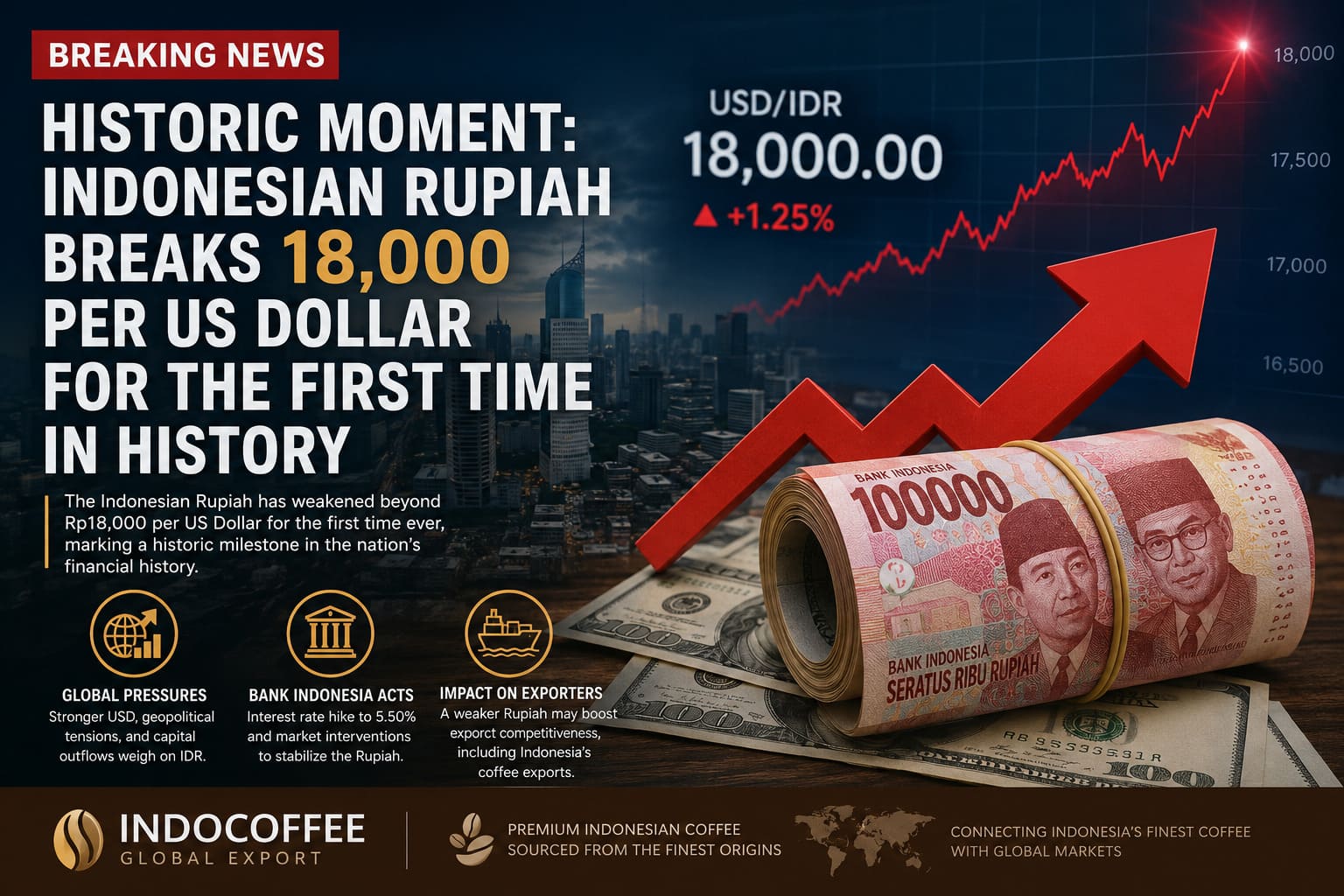
Indonesia’s currency has crossed a historic threshold. The Indonesian Rupiah (IDR) weakened beyond Rp18,000 per US Dollar for the first time since the nation’s independence, marking a significant milestone in the country’s financial history. Recent market data showed the Rupiah touching levels above Rp18,000 before stabilizing slightly following intervention measures by Bank Indonesia.
The depreciation comes amid a combination of global and domestic pressures, including rising geopolitical tensions, stronger demand for the US Dollar as a safe-haven asset, increasing energy prices, and concerns surrounding capital outflows from emerging markets. Analysts also point to investor uncertainty over fiscal policies and economic reforms as contributing factors.
Bank Indonesia Responds
In response to the sharp decline, Bank Indonesia took the rare step of implementing an off-cycle interest rate increase, raising its benchmark rate to 5.50%. The central bank stated that the move was aimed at stabilizing the exchange rate and maintaining inflation within its target range.
Authorities have also intensified foreign exchange market interventions and introduced measures designed to attract foreign capital back into Indonesian financial markets.
Opportunities for Indonesian Exporters
While a weaker currency presents challenges for importers and businesses dependent on foreign raw materials, it can create opportunities for export-oriented industries.
For Indonesian coffee exporters, the weaker Rupiah may enhance global competitiveness by making Indonesian products more affordable to overseas buyers when priced in US Dollars. Exporters receiving payments in foreign currencies could potentially benefit from higher Rupiah conversion values, helping offset rising domestic operational costs.
Indonesia remains one of the world’s leading producers of Robusta coffee, and the current exchange rate environment may encourage greater interest from international buyers seeking reliable and competitively priced coffee origins.
Challenges Remain
Despite potential export advantages, businesses should remain cautious. Higher transportation costs, increased prices for imported equipment and packaging materials, and continued currency volatility can affect profit margins. Exporters are encouraged to implement prudent financial planning, diversify markets, and maintain strong relationships with international buyers.
Looking Ahead
The movement of the Rupiah beyond Rp18,000 per US Dollar is a historic event that reflects the complexity of today’s global economic environment. Whether the currency stabilizes or continues to face pressure will depend on global market sentiment, commodity prices, monetary policy decisions, and investor confidence in Indonesia’s long-term economic outlook.
For Indonesia’s export sector, particularly coffee, this period may present both challenges and opportunities. Companies that remain agile, maintain quality standards, and strengthen international partnerships will be best positioned to navigate the evolving market landscape.
⸻
Published by Indocoffee Global Export
Connecting Indonesia’s Finest Coffee with Global Markets
Indonesia’s currency has crossed a historic threshold. The Indonesian Rupiah (IDR) weakened beyond Rp18,000 per US Dollar for the first time since the nation’s independence, marking a significant milestone in the country’s financial history. Recent market data showed the Rupiah touching levels above Rp18,000 before stabilizing slightly following intervention measures by Bank Indonesia.
The depreciation comes amid a combination of global and domestic pressures, including rising geopolitical tensions, stronger demand for the US Dollar as a safe-haven asset, increasing energy prices, and concerns surrounding capital outflows from emerging markets. Analysts also point to investor uncertainty over fiscal policies and economic reforms as contributing factors.
Bank Indonesia Responds
In response to the sharp decline, Bank Indonesia took the rare step of implementing an off-cycle interest rate increase, raising its benchmark rate to 5.50%. The central bank stated that the move was aimed at stabilizing the exchange rate and maintaining inflation within its target range.
Authorities have also intensified foreign exchange market interventions and introduced measures designed to attract foreign capital back into Indonesian financial markets.
Opportunities for Indonesian Exporters
While a weaker currency presents challenges for importers and businesses dependent on foreign raw materials, it can create opportunities for export-oriented industries.
For Indonesian coffee exporters, the weaker Rupiah may enhance global competitiveness by making Indonesian products more affordable to overseas buyers when priced in US Dollars. Exporters receiving payments in foreign currencies could potentially benefit from higher Rupiah conversion values, helping offset rising domestic operational costs.
Indonesia remains one of the world’s leading producers of Robusta coffee, and the current exchange rate environment may encourage greater interest from international buyers seeking reliable and competitively priced coffee origins.
Challenges Remain
Despite potential export advantages, businesses should remain cautious. Higher transportation costs, increased prices for imported equipment and packaging materials, and continued currency volatility can affect profit margins. Exporters are encouraged to implement prudent financial planning, diversify markets, and maintain strong relationships with international buyers.
Looking Ahead
The movement of the Rupiah beyond Rp18,000 per US Dollar is a historic event that reflects the complexity of today’s global economic environment. Whether the currency stabilizes or continues to face pressure will depend on global market sentiment, commodity prices, monetary policy decisions, and investor confidence in Indonesia’s long-term economic outlook.
For Indonesia’s export sector, particularly coffee, this period may present both challenges and opportunities. Companies that remain agile, maintain quality standards, and strengthen international partnerships will be best positioned to navigate the evolving market landscape.
⸻
Published by Indocoffee Global Export
Connecting Indonesia’s Finest Coffee with Global Markets